

Leviathan Summary of Thomas Hobbes's Book
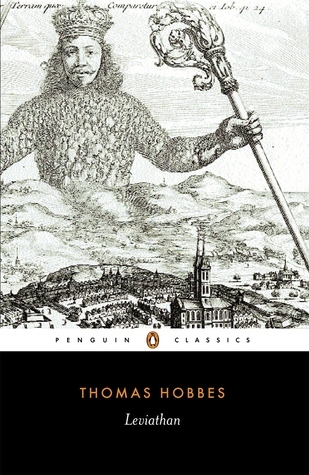
Leviathan #1-2
Title: Leviathan
Published: 1651
Table of Contents
Leviathan by Thomas Hobbes: A Political Philosophy Masterpiece
Published in 1651 during the tumultuous times of the English Civil War, Thomas Hobbes' Leviathan delves into the essence of human nature and the structure of society. In this groundbreaking work of political philosophy, Hobbes explores the concept of a Leviathan - a powerful sovereign - as a means to prevent the chaos and violence that threatens to engulf humanity. Despite facing immediate backlash and having his book burned for sedition upon its release, Leviathan remains a timeless and thought-provoking examination of statecraft and society.
Characters
The central character in Leviathan is the Leviathan itself, which symbolizes the sovereign power that Hobbes argues is necessary to maintain order in society. This Leviathan is a metaphorical representation of the collective body of the people united under a ruler who possesses absolute authority. The individual, or the "man," in Hobbes' work is depicted as driven by self-interest and the pursuit of power, leading to a state of perpetual war. Additionally, the book features a discussion of the social contract, which is the agreement by which individuals sacrifice some of their freedoms in exchange for security and protection provided by the Leviathan.
Detailed Summary
The essence of Hobbes' argument in Leviathan can be summed up by his famous quote, "the life of man, solitary, poore, nasty, brutish, and short." Hobbes paints a grim picture of human nature, asserting that without the presence of a powerful sovereign to enforce order, individuals are left to their own devices and are driven by their selfish desires. This leads to a constant state of conflict and violence, where life becomes a struggle for survival.
Hobbes proposes the formation of a social contract, in which individuals willingly give up some of their freedoms to a sovereign authority in exchange for protection and security. This Leviathan, whether in the form of a monarch, a democratic government, or a dictatorship, is tasked with maintaining law and order within society. Through the establishment of this Leviathan, Hobbes argues that individuals can escape the state of nature and live together in peace and harmony.
Extensive Analysis
Leviathan is a groundbreaking work that challenges conventional notions of political theory and social organization. Hobbes' stark portrayal of human nature as inherently selfish and power-hungry stands in contrast to earlier thinkers who believed in the innate goodness of mankind. By emphasizing the need for a strong central authority to maintain order, Hobbes raises important questions about the nature of power, authority, and the social contract.
One of the key takeaways from Leviathan is the concept of the Leviathan itself as a symbol of sovereignty and power. Hobbes argues that without a centralized authority to enforce laws and punish wrongdoing, society would descend into chaos. The Leviathan acts as a unifying force that holds society together, preventing individuals from reverting to a state of nature where "every man is enemy to every man."
Furthermore, Hobbes' exploration of the social contract and the relationship between the individual and the sovereign sheds light on the delicate balance between personal freedom and the need for order. Leviathan challenges readers to consider the implications of living in a society governed by a powerful ruler and the sacrifices that individuals must make to maintain peace and stability.
Final thoughts
To conclude, Leviathan by Thomas Hobbes is a thought-provoking and influential work of political philosophy that continues to resonate with readers today. Through his exploration of human nature, society, and the role of the sovereign, Hobbes raises important questions about the nature of power and the social contract. If you are interested in diving deeper into the complexities of political theory and governance, Leviathan is a must-read book that will challenge your understanding of society and the state.
If you enjoyed this summary of Leviathan, we encourage you to purchase the complete book for a more in-depth exploration of Thomas Hobbes' groundbreaking ideas. Alternatively, consider listening to the audiobook version for a convenient and immersive experience. Leviathan is a timeless classic that offers valuable insights into the nature of politics, power, and human relationships.
9780140431957 (ISBN10: 0140431950)
Format: 736 pages, Paperback
Original Title: Leviathan, or The Matter, Forme and Power of a Common Wealth Ecclesiasticall and Civil
Edition: November 19, 1981 by Penguin Books
Swallows and Amazons Summary of Arthur Ransome's Book

The Moon Is a Harsh Mistress Summary of Robert A. Heinlein's Book

Franny and Zooey Summary of J.D. Salinger's Book

Tales of Ordinary Madness Summary of Charles Bukowski's Book

At the Mountains of Madness and Other Tales of Terror Summary of H.P. Lovecraft's Book

The Lover Summary of Marguerite Duras's Book
Related Books