
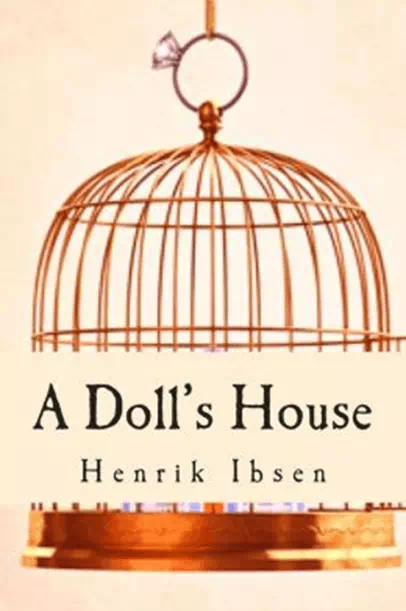

A Doll's House Summary of Henrik Ibsen's Book
Table of Contents
A Doll's House by Henrik Ibsen: An Exploration of Victorian Marriage
Henrik Ibsen's play, A Doll's House, first published in 1879, is a groundbreaking piece of literature that challenged the norms and expectations of Victorian marriage. The play caused a sensation when it was first performed, as it exposed the hypocrisy and oppressive nature of conventional gender roles of the time. A Doll's House is a powerful exploration of the limitations imposed on women and the consequences of living in a society that restricts personal freedom.
Characters
- Nora Helmer: The protagonist of the play, Nora is depicted as a naive and pampered woman who eventually comes to realize her own strength and independence. She is initially portrayed as a dutiful wife and mother who is devoted to her husband, but as the play progresses, she undergoes a transformation that challenges society's expectations of her role.
- Torvald Helmer: Nora's husband, Torvald is a condescending and controlling man who views his wife as a childlike figure. He prioritizes appearances and societal expectations over genuine emotional connection, leading to the breakdown of their marriage.
- Krogstad: A lawyer at Torvald's bank, Krogstad is a morally ambiguous character who blackmails Nora in order to secure his position at the bank. Despite his questionable actions, Krogstad is ultimately revealed to have a more complex and sympathetic nature.
- Anne-Marie: The Helmers' nanny, Anne-Marie serves as a maternal figure to Nora's children. She provides insight into the challenges faced by working-class women who must sacrifice their own desires for the sake of their families.
- Helene Alving: A wealthy widow, Helene is a character from Ibsen's play "Ghosts" who is haunted by the secrets of her past. Her struggles with guilt and societal expectations mirror those of Nora in A Doll's House.
- Osvald Alving: Helene's son, Osvald is an artist who grapples with the legacy of his father's immoral behavior. His relationship with his mother reflects the themes of deception and betrayal present throughout the play.
- Regine Engstrand: A maid in the Helmer household, Regine is revealed to be Krogstad's illegitimate daughter. Her presence complicates the dynamics of the play and highlights the interconnectedness of the characters' lives.
- Dr. Rank: A family friend of the Helmers, Dr. Rank is a terminally ill man who harbors unrequited feelings for Nora. His character serves as a commentary on the destructive nature of societal expectations and the toll they take on individuals.
- Mrs. Linde: An old friend of Nora's, Mrs. Linde is a widow who has experienced hardship and loss. Her pragmatic approach to life contrasts with Nora's idealistic beliefs, providing a foil for the protagonist's journey of self-discovery.
Detailed Summary
A Doll's House follows the story of Nora Helmer, a young housewife who lives in apparent comfort with her husband Torvald and their three children. As the play begins, Nora is eagerly preparing for Christmas and is preoccupied with securing a loan to pay off a debt she incurred years earlier. It is revealed that Nora forged her father's signature to borrow money to finance a trip to Italy to save Torvald's life, a fact that has been kept secret from her husband.
Nora's deception comes to light when Krogstad, a disgraced bank employee, threatens to expose her actions unless she intervenes on his behalf to secure his position at the bank. Torvald dismisses Nora's pleas for mercy and insists on upholding his reputation at all costs, leading Nora to question the authenticity of their marriage. Ultimately, Nora realizes that she has been living as a "doll" in Torvald's house, playing the role of the perfect wife while sacrificing her own autonomy and identity.
In a moment of defiance and self-discovery, Nora decides to leave Torvald and her children in order to seek independence and self-fulfillment. The play ends with Nora's iconic exit, symbolizing her rejection of societal expectations and her embrace of personal freedom.
Analysis
A Doll's House is a powerful exploration of the limitations imposed on women in Victorian society and the consequences of living under patriarchal norms. Through the character of Nora, Ibsen challenges the traditional roles of wife and mother, highlighting the dehumanizing effects of conforming to societal expectations. Nora's transformation from a submissive and dependent woman to a liberated and empowered individual is a radical act of self-assertion that resonates with audiences to this day.
The play's themes of deception, betrayal, and freedom are woven together with complex characters and compelling dialogue that drive the narrative forward. Ibsen's masterful use of symbolism, such as the dollhouse itself and the motif of the tarantella dance, adds depth and complexity to the story, inviting readers to contemplate the hidden truths and illusions that shape human relationships.
A Doll's House is a timeless work of literature that continues to provoke thought and dialogue on issues of gender, identity, and societal norms. By challenging the conventions of his time, Ibsen paved the way for future generations of writers and artists to explore themes of liberation, equality, and self-determination.
Final thoughts
To conclude, A Doll's House by Henrik Ibsen is a groundbreaking play that continues to captivate audiences with its exploration of Victorian marriage and gender roles. Through compelling characters and thought-provoking themes, Ibsen invites readers to question the nature of personal freedom and the consequences of living in a society that restricts individual autonomy. Whether you are a fan of classic literature or interested in social commentary, A Doll's House is a must-read for anyone seeking to delve into the complexities of human relationships and societal expectations.
If you enjoyed this summary, I highly recommend purchasing the complete book or listening to the audiobook to experience the full impact of Ibsen's powerful storytelling. Happy reading!
- Reference: https://www.penguinrandomhouse.com
- Image Source: https://images-na.ssl-images-amazon.com
9781406914832 (ISBN10: 1406914835)
Format: 122 pages, Paperback
Original Title: Et dukkehjem
Edition: January 1, 2007 by Hard Press
Rembulan Tenggelam Di Wajahmu Summary of Tere Liye's Book

Julius Caesar Summary of William Shakespeare's Book

Prometheus Bound Summary of Aeschylus's Book

As You Like It Summary of William Shakespeare's Book

Hedda Gabler Summary of Henrik Ibsen's Book

The Prodigal Daughter Summary of Jeffrey Archer's Book
Related Books