

A Room of One’s Own Summary of Virginia Woolf's Book
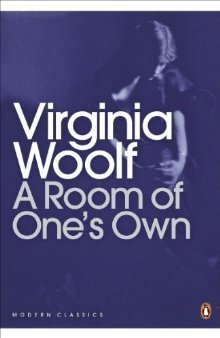
Title: A Room of One’s Own
Published: 1929
Table of Contents
A Room of One’s Own by Virginia Woolf: Book Summary
A Room of One’s Own, written by the legendary Virginia Woolf, is a groundbreaking piece of feminist literature that explores the challenges women face in both writing and being represented in fiction. First published on the 24th of October, 1929, the essay is based on a series of lectures Woolf delivered at women’s colleges at Cambridge University in 1928. In this extended essay, Woolf delves into the importance of women having their own space and financial independence in order to fully express themselves creatively. Let’s take a closer look at the characters, summary, and analysis of this influential work.
Characters
The protagonist of A Room of One’s Own is a fictitious narrator, who serves as a mouthpiece for Woolf’s own thoughts and observations. Throughout the essay, the narrator reflects on the lives of women writers throughout history and the ways in which they have been marginalized or ignored. While there are no specific fictional characters in the traditional sense, the essay is filled with rich examples of real-life women writers and their struggles to find success in a male-dominated literary world.
Detailed Summary
A Room of One’s Own begins with the narrator’s visit to Oxbridge, a fictionalized version of Oxford and Cambridge, where she is tasked with exploring the challenges facing women in academia and the arts. As she wanders the campus, she reflects on the lack of opportunities available to women throughout history and the ways in which they have been excluded from the literary canon. The narrator argues that in order for women to succeed as writers, they must have both a room of their own for solitude and financial independence to support their work.
Throughout the essay, the narrator discusses various women writers who have been overlooked or forgotten in the male-dominated literary world. She examines the ways in which women have historically been portrayed in literature, often as one-dimensional characters or simply as objects of male desire. The narrator also explores the concept of female creativity and the ways in which women can carve out space for themselves within a patriarchal society.
Analysis
A Room of One’s Own is a powerful work of feminist literature that continues to resonate with readers today. Woolf’s argument for women to have a physical and metaphorical space of their own in order to create is a central theme of the essay. By highlighting the ways in which women have been marginalized and oppressed in literature, Woolf challenges readers to consider the ways in which gender shapes our understanding of creativity and success.
The essay is also a critique of the traditional literary canon, which has historically prioritized the voices of men over women. Woolf’s exploration of the ways in which women writers have been excluded from the literary tradition serves as a call to action for greater representation and inclusion in the arts.
Final thoughts
To conclude, A Room of One’s Own is a groundbreaking work of feminist literature that continues to inspire readers over ninety years after its initial publication. Woolf’s exploration of the challenges women face in finding success as writers and the ways in which they have been marginalized in the literary world is as relevant today as it was in 1929. If you are interested in exploring the issues of gender, creativity, and representation in literature, I highly recommend picking up a copy of A Room of One’s Own.
For those who prefer listening, the audiobook version of A Room of One’s Own is also available for a convenient and immersive experience. Enjoy this thought-provoking essay and delve into the world of Virginia Woolf’s powerful words.
Purchase the book here.
Format: 112 pages, Paperback
Original Title: A Room of One’s Own
Edition: January 1, 2000 by Penguin Books
Swallows and Amazons Summary of Arthur Ransome's Book

The Moon Is a Harsh Mistress Summary of Robert A. Heinlein's Book

Franny and Zooey Summary of J.D. Salinger's Book

Tales of Ordinary Madness Summary of Charles Bukowski's Book

At the Mountains of Madness and Other Tales of Terror Summary of H.P. Lovecraft's Book

The Lover Summary of Marguerite Duras's Book
Related Books