

Atonement Summary of Ian McEwan's Book
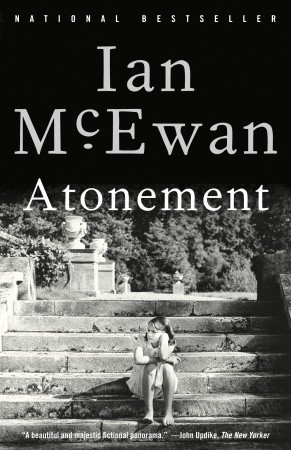
Title: Atonement
Published: 2001
Table of Contents
Exploring the Depths of Guilt and Redemption in Ian McEwan's Atonement
Ian McEwan's novel, Atonement, first published on September 20, 2001, is a masterpiece that delves into the complexities of love, war, childhood, class, guilt, and forgiveness. Set against the backdrop of pre-World War II and post-war United Kingdom, the story follows the lives of the Tallis family and how a single act of a young girl's imagination changes everything.
Characters
Briony Tallis: The thirteen-year-old protagonist who witnesses a flirtation between her sister, Cecilia, and Robbie Turner, leading to a crime that haunts her conscience for years.
Emily Tallis: The matriarch of the Tallis family, who struggles to maintain the family's reputation and deal with the repercussions of Briony's actions.
Cecilia Tallis: Briony's older sister who falls in love with Robbie Turner and suffers the consequences of Briony's misinterpretation of events.
Robbie Turner: The son of the Tallis family's housekeeper, who is wrongly accused of a crime he did not commit.
Detailed Summary
On a scorching summer day in 1935, Briony Tallis witnesses a moment of intimacy between her sister, Cecilia, and Robbie Turner. Misinterpreting the situation, Briony falsely accuses Robbie of a crime that changes the course of their lives forever. Robbie is sent to prison, Cecilia cuts ties with her family, and Briony is left grappling with her guilt. As World War II breaks out, Robbie is given the opportunity to enlist to secure an early release, while Cecilia becomes a nurse in the war efforts.
The novel follows Briony's perspective as she seeks redemption for her actions, first by becoming a nurse like her sister, and later by writing a novel that recreates the events of that fateful summer day. As the war unfolds and lives are forever altered, Briony's guilt only deepens, leading to a shocking revelation in the novel's final chapters.
Extensive Analysis
One of the central themes of Atonement is the idea of how one moment of misunderstanding and false accusation can have far-reaching consequences. Through Briony's eyes, we see the power of guilt, imagination, and the desire for redemption. McEwan's prose is exquisite, drawing readers into the inner turmoil of each character as they navigate love, war, and the shifting dynamics of class and society.
The novel's structure, with its twist ending and meta-fictional elements, adds layers of complexity to the narrative. McEwan plays with the idea of storytelling itself, questioning the reliability of memory and perspective. Is redemption truly possible through art, or are some sins too great to ever truly atone for?
Ultimately, Atonement is a haunting and beautiful exploration of the human condition, offering no easy answers but inviting readers to reflect on the power of forgiveness and the weight of guilt. It is a timeless classic that continues to resonate with readers long after they turn the final page.
Final thoughts
To conclude, Ian McEwan's Atonement is a must-read for anyone who appreciates a thought-provoking and intricately woven narrative. The novel's rich characters, lush prose, and powerful themes make it a captivating read that will linger in your mind long after you finish it. If you enjoyed this summary, I highly recommend purchasing the complete book or listening to the audiobook to experience the full depth and beauty of McEwan's storytelling. Happy reading!
9780385721790 (ISBN10: 038572179X)
Format: 351 pages, Paperback
Original Title: Atonement
Edition: March 1, 2003 by Anchor Books
Swallows and Amazons Summary of Arthur Ransome's Book

The Moon Is a Harsh Mistress Summary of Robert A. Heinlein's Book

Franny and Zooey Summary of J.D. Salinger's Book

Tales of Ordinary Madness Summary of Charles Bukowski's Book

At the Mountains of Madness and Other Tales of Terror Summary of H.P. Lovecraft's Book

The Lover Summary of Marguerite Duras's Book
Related Books