

Brave New World / Brave New World Revisited Summary of Aldous Huxley's Book
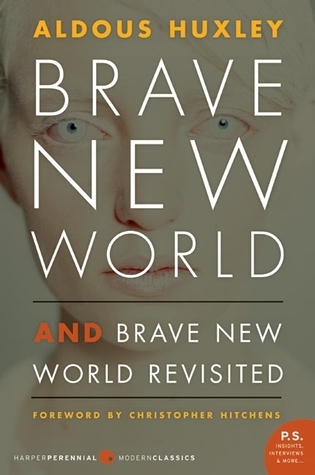
Title: Brave New World / Brave New World Revisited
Published: 1958
Table of Contents
Discover the Dystopian Realities of Aldous Huxley's Brave New World/Brave New World Revisited
Aldous Huxley's Brave New World/Brave New World Revisited is a powerful and thought-provoking novel that offers a chilling glimpse into a future where scientific and psychological engineering have transformed society. Originally published in 1932, Brave New World presents a world where individuals are genetically designed to be passive and obedient to the ruling class through a combination of genetic manipulation and psychological conditioning. This dystopian vision of the future has captivated readers for decades and continues to be relevant today.
In Brave New World Revisited, published in 1958, Huxley revisits the themes and concepts of his original work, drawing parallels between the world he created and the evolving realities of the mid-20th century. Through a detailed analysis of modern-day issues such as over-population, propaganda, and the use of mind-altering substances, Huxley invites readers to reflect on the dangers of unchecked technological and social progress.
Characters
The characters in Brave New World are a diverse and complex mix of individuals who inhabit a world where conformity and complacency are prized above all else. The main character, Bernard Marx, is a disillusioned Alpha male who struggles to fit into the rigid social hierarchy of the World State. His interactions with the rebellious and free-spirited Lenina Crowne expose the cracks in the carefully constructed facade of their society.
Other notable characters include Mustapha Mond, the World Controller who oversees the operations of the World State, and John the Savage, a young man raised outside of the confines of the World State who serves as a symbol of individuality and resistance. Each character in Brave New World plays a vital role in highlighting the unsettling consequences of a world where personal autonomy is sacrificed in the name of societal harmony.
Detailed Summary
Brave New World opens with a glimpse into the highly controlled society of the World State, where individuals are bred, conditioned, and programmed from birth to fulfill predetermined roles in society. The World State operates under strict rules and regulations that dictate every aspect of an individual's life, from their career path to their personal relationships.
As the story unfolds, readers are introduced to Bernard Marx, an Alpha male who harbors deep reservations about the values and practices of the World State. Bernard's relationship with Lenina Crowne, a Beta female who embodies the ideals of their society, serves as a focal point for the novel's exploration of individuality and conformity.
When Bernard and Lenina travel to a savage reservation outside of the World State, they encounter John, a young man raised by a woman from the World State who has rejected the values of her society. John's presence disrupts the carefully maintained order of the World State, forcing the characters to confront the consequences of their actions and beliefs.
Extensive Analysis
Brave New World/Brave New World Revisited is a poignant commentary on the dangers of unchecked technological and social progress. Through his exploration of themes such as genetic manipulation, psychological conditioning, and governmental control, Huxley raises important questions about the nature of freedom, individuality, and human identity.
The World State depicted in Brave New World is a cautionary tale of the perils of sacrificing personal autonomy in the pursuit of societal stability. Huxley's vision of a world where individuals are reduced to mere cogs in a larger machine serves as a stark reminder of the importance of defending our rights and freedoms in the face of encroaching authoritarianism.
In Brave New World Revisited, Huxley expands on the themes of his original work, offering a sobering analysis of the ways in which modern society has moved closer to the dystopian future he envisioned. From the rise of mass media and propaganda to the proliferation of mind-altering substances, Huxley's insights into the threats facing humanity are as prescient today as they were over six decades ago.
Overall, Brave New World/Brave New World Revisited is a seminal work of science fiction that continues to resonate with readers around the world. By challenging us to confront the uncomfortable truths about our society and our future, Huxley invites us to consider what it truly means to be human in a world where technology and power hold sway.
Final thoughts
If you are intrigued by the themes and concepts explored in Aldous Huxley's Brave New World/Brave New World Revisited, I highly recommend picking up a copy of the complete book. Whether you are a fan of classic literature, science fiction, or dystopian fiction, this thought-provoking novel is sure to leave a lasting impact on your perspective of the world. And if you prefer to listen to books on the go, consider checking out the audiobook version for a captivating and immersive experience. Happy reading!
9780060776091 (ISBN10: 0060776099)
Format: 340 pages, Paperback
Original Title: Brave New World / Brave New World Revisited
Edition: July 5, 2005 by Harper Perennial Modern Classics
Swallows and Amazons Summary of Arthur Ransome's Book

The Moon Is a Harsh Mistress Summary of Robert A. Heinlein's Book

Franny and Zooey Summary of J.D. Salinger's Book

Tales of Ordinary Madness Summary of Charles Bukowski's Book

At the Mountains of Madness and Other Tales of Terror Summary of H.P. Lovecraft's Book

The Lover Summary of Marguerite Duras's Book
Related Books