

Capital: A Critique of Political Economy, Volume 1 Summary of Karl Marx's Book
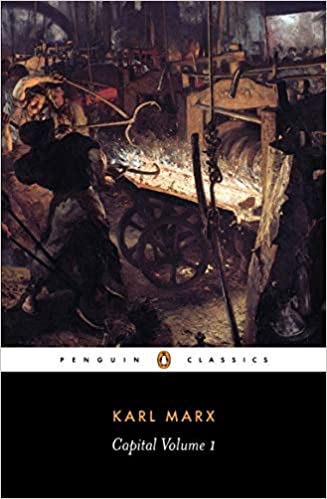
Capital #1
Title: Capital: A Critique of Political Economy, Volume 1
Published: 1867
Table of Contents
The Legacy of Karl Marx: A Deep Dive into Capital: A Critique of Political Economy, Volume 1
Karl Marx, a renowned philosopher, economist, and political theorist, left a lasting legacy through his groundbreaking work, Capital: A Critique of Political Economy. Published on September 14, 1867, this monumental book delves into the complexities of the capitalist mode of production, offering a critical analysis of the economic system that shaped the industrial society of Marx's era.
The Characters
In Capital, Karl Marx is not only the author but also a central character in the narrative. Through his meticulous research and keen observations, Marx unravels the intricate workings of capitalism, shedding light on its exploitative nature and the inherent contradictions that drive it.
The proletariat, or the working class, emerges as another prominent character in Capital. Marx portrays the proletariat as the exploited labor force that drives the capitalist machine, highlighting their struggles and aspirations in the face of oppressive working conditions and economic inequality.
The bourgeoisie, or the capitalist class, represents the antagonistic force in Capital. Marx scrutinizes the bourgeoisie's relentless pursuit of profit at the expense of the proletariat, revealing the class conflicts and power dynamics inherent in capitalist societies.
Detailed Summary
Capital: A Critique of Political Economy, Volume 1, offers a comprehensive analysis of the capitalist mode of production, focusing on the processes of commodity production, exchange, and consumption. Marx begins by examining the concept of commodities, emphasizing their dual nature as both use-values and exchange-values.
Through an exploration of the labor theory of value, Marx elucidates how labor power becomes commodified under capitalism, leading to the exploitation of the proletariat by the bourgeoisie. He delves into the concept of surplus value, revealing how capitalists extract surplus labor from workers to maximize profits.
Marx also dissects the mechanisms of capital accumulation, elucidating the role of capitalist competition, technological advancements, and the commodification of labor in driving the growth of capital. Moreover, he critiques the alienating effects of capitalism on workers, highlighting how labor becomes a mere commodity under the capitalist system.
In his critique of capitalist ideology and political economy, Marx exposes the contradictions and inequalities inherent in the capitalist mode of production. He advocates for the revolutionary transformation of society, calling for the abolition of private property and the establishment of a classless society based on the principles of socialism.
Extensive Analysis
Capital: A Critique of Political Economy, Volume 1, stands as a seminal work that continues to shape debates in philosophy, economics, and politics. Marx's incisive analysis of capitalism's contradictions and exploitation resonates with contemporary discussions on income inequality, labor rights, and economic justice.
One of the key strengths of Capital lies in Marx's rigorous methodology and theoretical insights. By grounding his analysis in historical materialism and the labor theory of value, Marx unveils the structural underpinnings of capitalism while offering a critique of bourgeois economics and ideology.
Moreover, Capital's dialectical approach to understanding capitalism as a dynamic and contradictory system has influenced generations of scholars and activists seeking to challenge the status quo. Marx's vision of a socialist society based on collective ownership and democratic control continues to inspire movements for social and economic change.
To conclude, Capital: A Critique of Political Economy, Volume 1, remains a foundational text in the canon of Marxist literature, offering a sharp critique of capitalism and a compelling vision for a more just and equitable society. As we grapple with the challenges of a globalized economy and widening income disparities, Marx's analysis in Capital provides valuable insights and prompts us to rethink the prevailing economic order.
Final thoughts
If you are intrigued by the ideas presented in this summary, I highly recommend delving into the complete work of Capital: A Critique of Political Economy, Volume 1, by Karl Marx. Whether you are a student of philosophy, economics, or politics, this book offers a profound exploration of the complexities of capitalism and the possibilities for social transformation.
For those who prefer auditory learning, consider listening to the audiobook version of Capital to immerse yourself in Marx's revolutionary ideas and engage with the text in a new way. Whichever format you choose, the insights and critiques offered in Capital are sure to stimulate your thinking and provoke further reflection on the nature of our economic system.
9780140445688 (ISBN10: 0140445684)
Format: 1152 pages, Paperback
Original Title: Das Kapital. Kritik der politischen Ökonomie. Buch I: Der Produktionsprozeß des Kapitals
Edition: May 5, 1992 by Penguin Classics
The Drunkard's Walk: How Randomness Rules Our Lives Summary of Leonard Mlodinow's Book

Nudge: Improving Decisions About Health, Wealth, and Happiness Summary of Richard H. Thaler's Book

Capital: A Critique of Political Economy, Volume 2 Summary of Karl Marx's Book

Factfulness: Ten Reasons We're Wrong About the World – and Why Things Are Better Than You Think Summary of Hans Rosling's Book

Prisoners of Geography: Ten Maps That Tell You Everything You Need to Know About Global Politics Summary of Tim Marshall's Book

The Law Summary of Frédéric Bastiat's Book
Related Books