

Fahrenheit 451 Summary of Ray Bradbury's Book
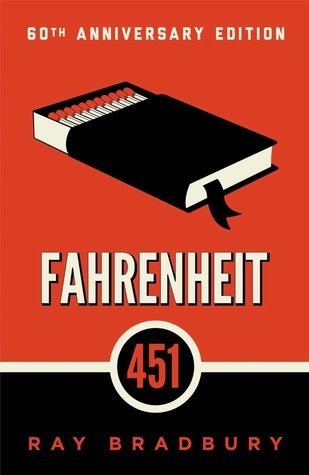
Title: Fahrenheit 451
Published: 1953
Table of Contents
Fahrenheit 451 by Ray Bradbury: A Classic Dystopian Novel
Ray Bradbury’s groundbreaking novel, Fahrenheit 451, first published in 1953, takes readers on a journey through a dystopian future where books are banned and firemen are tasked with burning any that are discovered. The story follows the protagonist, Guy Montag, as he grapples with his role in this oppressive society and begins to question the very foundations of his existence. As relevant now as it was over six decades ago, this classic work of science fiction offers a chilling warning about the dangers of censorship and the importance of critical thinking.
Characters
Guy Montag
Guy Montag is a fireman who revels in his job of burning books until he meets Clarisse McClellan, a young woman who challenges his beliefs and opens his eyes to a different way of living. As the protagonist of the story, Montag undergoes a profound transformation as he grapples with the consequences of living in a society devoid of intellectual freedom.
Clarisse McClellan
Clarisse is a young woman who disrupts Montag's complacency with her unconventional thoughts and questions about the world around them. Her presence in his life awakens a desire for knowledge and a newfound sense of curiosity that propels Montag on a path of self-discovery.
Mildred Montag
Mildred is Guy Montag's wife, who is absorbed in the shallow and vapid world of her television "family." Her lack of interest in meaningful connection or intellectual pursuits serves as a stark contrast to Montag's growing disillusionment with the status quo.
Captain Beatty
Captain Beatty is Montag's superior and the embodiment of the oppressive regime that dictates the destruction of books. Despite his authoritative demeanor, Beatty harbors a complex understanding of the role of censorship in maintaining social order.
Professor Faber
Professor Faber is an elderly man who provides Montag with guidance and wisdom as he grapples with the implications of his newfound awareness. Faber represents the knowledge and wisdom that Montag seeks in his quest for truth and understanding.
The Mechanical Hound
The Mechanical Hound is a robotic creature designed to track down and eliminate dissidents who dare to defy the government's decree against books. Its presence serves as a constant reminder of the consequences of disobedience and the dangers of challenging authority.
Detailed Summary
In a future society where books are banned and intellectual freedom is non-existent, Guy Montag works as a fireman whose job is to burn any illegal literature that is discovered. Despite his enthusiasm for destroying books, Montag begins to question the validity of his actions after meeting Clarisse McClellan, a young woman who challenges his beliefs and introduces him to a world of ideas and knowledge that he had never before considered.
As Montag becomes increasingly disillusioned with the oppressive regime that governs society, he begins to hide books in his home and seeks out the guidance of Professor Faber, an old man who shares his desire for intellectual freedom. However, Montag's actions do not go unnoticed, and he soon finds himself pitted against his former mentor, Captain Beatty, who reveals the darker truths behind the government's control of information.
As Montag faces the consequences of his defiance and grapples with the true meaning of freedom, he is forced to confront the reality of living in a society that values conformity over individual thought. Ultimately, Montag must make a choice between remaining complicit in the oppression of knowledge or risking everything to fight for the right to think and learn for himself.
Analysis
At its core, Fahrenheit 451 is a powerful commentary on the dangers of censorship, the importance of critical thinking, and the value of intellectual freedom. Through the character of Guy Montag, Ray Bradbury paints a vivid portrait of a society that is devoid of individuality and creativity, where conformity is valued above all else. The novel serves as a cautionary tale about the consequences of suppressing dissent and the inherent dangers of a culture that prioritizes ignorance over knowledge.
Bradbury's prose is both poetic and haunting, drawing readers into a world that is at once familiar and yet eerily surreal. The themes of technology, mass media, and government control resonate strongly in today's world, making Fahrenheit 451 as relevant now as it was when it was first published over sixty years ago.
To conclude, Fahrenheit 451 is a timeless classic that continues to captivate readers with its powerful message and thought-provoking narrative. Ray Bradbury's exploration of censorship, conformity, and the pursuit of knowledge remains as relevant today as ever, serving as a reminder of the importance of intellectual freedom in a world that is increasingly plagued by misinformation and propaganda.
Final thoughts
For those who enjoy thought-provoking dystopian fiction that challenges the status quo, Fahrenheit 451 is a must-read. Its enduring relevance and timeless themes make it a standout work of science fiction that will leave readers questioning the limits of free thought and the consequences of censorship. To fully immerse yourself in Bradbury's visionary world, consider purchasing the complete book or listening to the audiobook for a truly immersive experience that will stay with you long after you've finished reading.
Format: 194 pages, Kindle Edition
Original Title: Fahrenheit 451
Edition: December 6, 2011 by Simon & Schuster
Swallows and Amazons Summary of Arthur Ransome's Book

The Moon Is a Harsh Mistress Summary of Robert A. Heinlein's Book

Franny and Zooey Summary of J.D. Salinger's Book

Tales of Ordinary Madness Summary of Charles Bukowski's Book

At the Mountains of Madness and Other Tales of Terror Summary of H.P. Lovecraft's Book

The Lover Summary of Marguerite Duras's Book
Related Books