

Humankind: A Hopeful History Summary of Rutger Bregman's Book
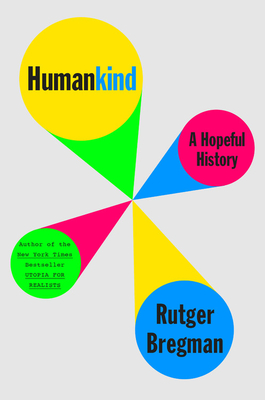
Title: Humankind: A Hopeful History
Published: 2019
Table of Contents
Unlocking the Power of Cooperation: A Summary and Analysis of "Humankind: A Hopeful History" by Rutger Bregman
In his thought-provoking book "Humankind: A Hopeful History," Rutger Bregman challenges the conventional wisdom that humans are inherently selfish and self-interested. Drawing on a deep well of historical evidence and psychological research, Bregman posits that cooperation, rather than competition, has been the driving force behind our species' success. Published on September 3, 2019, this nonfiction work sheds light on our capacity for empathy, trust, and altruism, offering a refreshing perspective on human nature.
Character Exploration
While "Humankind" does not center around specific characters in the traditional sense, Bregman weaves together a tapestry of real-life stories and psychological experiments to illustrate his thesis. From the twin brothers who bridged the racial divide in apartheid-era South Africa to the shipwrecked children who exemplified resilience through teamwork, Bregman showcases the inherent goodness that resides within us all. Through these narratives, he challenges readers to rethink their assumptions about human behavior and consider the transformative power of cooperation.
Detailed Summary
At the core of "Humankind" is Bregman's argument that cooperation is not only beneficial but also hardwired into our evolutionary DNA. He dismantles the myth of human selfishness by debunking famous experiments like the Milgram obedience study and the Zimbardo prison experiment, which purported to show our capacity for cruelty. Instead, Bregman highlights lesser-known examples of human kindness and compassion that defy traditional beliefs about human nature.
For instance, he recounts how a group of American soldiers during World War II refused to follow orders to shoot at the enemy, challenging the notion of innate aggression. Bregman also delves into the story of the "bystander effect," revealing that individuals are more likely to help others in times of crisis than turn a blind eye. By reframing these narratives, Bregman invites readers to consider the possibility of a more optimistic and hopeful view of humanity.
Extensive Analysis
Bregman's thesis in "Humankind" is a radical departure from the prevailing cultural narratives that emphasize competition and self-interest. By synthesizing historical accounts, psychological research, and evolutionary theory, he constructs a compelling argument for the inherent goodness of human beings. Rather than succumbing to a deterministic view of human nature, Bregman advocates for a more nuanced understanding that celebrates our capacity for empathy and cooperation.
Moreover, Bregman's analysis challenges the dichotomy between capitalism and communism, suggesting that a third way based on individual agency and collective action may hold the key to a more harmonious society. By empowering citizens and professionals to make autonomous choices guided by ethical principles, Bregman asserts that we can create a world where cooperation thrives and humanity flourishes.
To conclude, "Humankind: A Hopeful History" is a groundbreaking work that invites readers to reconsider their assumptions about human nature. Through a compelling blend of storytelling and empirical evidence, Rutger Bregman argues for a more optimistic and inclusive vision of society. By embracing cooperation as a foundational principle, we can unlock the transformative power of human solidarity and forge a path towards a brighter future.
If you found this summary intriguing, be sure to pick up a copy of "Humankind: A Hopeful History" by Rutger Bregman or listen to the audiobook for a deep dive into the complexities of human nature and the potential for positive change.
9780316418539 (ISBN10: 0316418536)
Format: 462 pages, Hardcover
Original Title: De meeste mensen deugen. Een nieuwe geschiedenis van de mens
Edition: June 2, 2020 by Little, Brown and Company
Going Clear: Scientology, Hollywood, and the Prison of Belief Summary of Lawrence Wright's Book

The Omnivore's Dilemma: A Natural History of Four Meals Summary of Michael Pollan's Book

The Power Broker: Robert Moses and the Fall of New York Summary of Robert A. Caro's Book

Truman Summary of David McCullough's Book

The Decline and Fall of the Roman Empire Summary of Edward Gibbon's Book

Flags of Our Fathers Summary of James D. Bradley's Book
Related Books