

Midnight's Children Summary of Salman Rushdie's Book
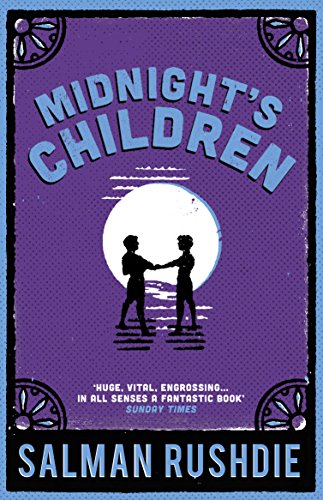
Title: Midnight's Children
Published: 1981
Table of Contents
Midnight's Children by Salman Rushdie: A Magical Realism Masterpiece
Salman Rushdie’s Midnight's Children is a spellbinding tale that weaves together history, politics, and magical realism to create a truly unique reading experience. First published on March 12, 1981, this novel has since become a classic work of fiction that continues to captivate readers worldwide. Set against the backdrop of India’s independence in 1947, the story follows the life of Saleem Sinai, who is born at the exact moment of the country’s independence and discovers that he is one of "midnight's children," born with magical gifts and linked by telepathy. As Saleem’s life unfolds, so too does the tumultuous history of India, making for a gripping and poignant narrative that explores themes of identity, destiny, and the interconnectedness of individuals with the larger forces at play in the world.
Characters
Midnight's Children is populated with a rich and diverse cast of characters, each with their own unique personalities and roles in Saleem’s life. Some of the notable characters include Saleem Sinai, the protagonist who is born at the stroke of midnight on August 15, 1947; Jawaharlal Nehru, India’s first Prime Minister who plays a significant role in Saleem’s life; Reginald Dyer, the British officer responsible for the Amritsar massacre; Aadam Aziz, Saleem’s grandfather who is a doctor with a distinctive sense of smell; and Naseem Ghani, Saleem’s grandmother who is deeply devoted to her family. Each character brings depth and complexity to the story, adding layers of meaning and emotion to the narrative.
Detailed Summary
Saleem Sinai is born at the exact moment of India’s independence, a coincidence that sets the stage for the extraordinary events that follow. As Saleem grows up, he discovers that he is one of "midnight's children," a group of 1,000 individuals born in the first hour of independence and endowed with magical powers. Saleem’s life becomes intertwined with the fate of India, as his every action mirrors and influences the course of national affairs. As he struggles to come to terms with his identity and his place in the world, Saleem must navigate a turbulent political landscape and confront the challenges of being a part of a generation marked by history.
Extensive Analysis
Midnight's Children is a masterful work of magical realism that blends the fantastical with the historical to create a rich and immersive reading experience. Through the character of Saleem Sinai, Rushdie explores the complexities of post-colonial India and the legacy of independence, touching on themes of identity, memory, and the power of storytelling. The novel’s intricate narrative structure, which moves back and forth in time and incorporates elements of myth and history, adds depth and nuance to the story, inviting readers to delve deep into the heart of the Indian experience. With its vivid descriptions, evocative language, and compelling characters, Midnight's Children captivates and challenges readers, inviting them to reflect on the interconnectedness of individual lives and the larger forces that shape our world.
Final thoughts
To conclude, Midnight's Children is a literary tour de force that offers a glimpse into the soul of a nation and the lives of its people. With its engaging plot, memorable characters, and profound themes, this novel is a must-read for anyone interested in exploring the complexities of Indian history and culture. Whether you are a fan of magical realism, historical fiction, or simply enjoy a well-crafted story, Midnight's Children is sure to leave a lasting impression. So, if you enjoyed this summary, be sure to pick up a copy of the complete book or listen to the audiobook to experience the full magic of Salman Rushdie’s masterpiece.
9780099578512 (ISBN10: 0099578514)
Format: 647 pages, Paperback
Original Title: Midnight's Children
Edition: May 1, 1995 by Vintage
Swallows and Amazons Summary of Arthur Ransome's Book

The Moon Is a Harsh Mistress Summary of Robert A. Heinlein's Book

Franny and Zooey Summary of J.D. Salinger's Book

Tales of Ordinary Madness Summary of Charles Bukowski's Book

At the Mountains of Madness and Other Tales of Terror Summary of H.P. Lovecraft's Book

The Lover Summary of Marguerite Duras's Book
Related Books