

On Liberty Summary of John Stuart Mill's Book
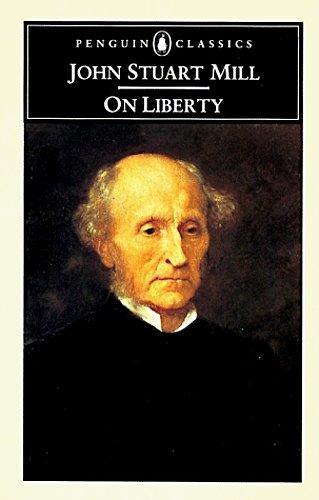
Title: On Liberty
Published: 1859
Table of Contents
On Liberty by John Stuart Mill: A Timeless Defense of Individual Freedom
An Introduction to John Stuart Mill and On Liberty
John Stuart Mill, a British philosopher, political economist, and civil servant, was one of the most influential thinkers of the 19th century. His work, On Liberty, which was first published on April 1, 1859, is a seminal text in the fields of philosophy, nonfiction, and classics. In this book, Mill presents a powerful argument in support of individual freedom and autonomy, challenging the prevailing views of his time and laying the groundwork for modern liberal thought.
The Characters in On Liberty
While On Liberty does not feature traditional characters in the way that a novel does, John Stuart Mill's ideas and arguments can be seen as the driving forces behind the text. Mill himself can be considered the protagonist, as he advocates for the rights and freedoms of individuals in the face of societal pressures and government intervention. Through his eloquent writing and persuasive reasoning, Mill presents a compelling case for the importance of liberty in a democratic society.
A Detailed Summary of On Liberty
On Liberty is divided into five chapters, each addressing different aspects of the concept of liberty. In the first chapter, Mill discusses the importance of individuality and the need for freedom of thought and expression. He argues that society benefits from the diversity of ideas and opinions that arise when individuals are allowed to think and speak freely.
In the second chapter, Mill examines the limits of the authority of society over the individual. He discusses the harm principle, which states that the only purpose for which power can be rightfully exercised over any member of a civilized community is to prevent harm to others. Mill contends that individuals should be free to do as they please as long as they do not harm others in the process.
The third chapter of On Liberty focuses on the tyranny of the majority and the dangers of conformity. Mill argues that society should not impose its values and beliefs on individuals, as doing so stifles creativity and innovation. He advocates for tolerance and open-mindedness, even towards those whose views may be considered unconventional or unpopular.
In the fourth chapter, Mill addresses the importance of freedom of speech and the press. He argues that the free exchange of ideas is essential for intellectual and moral progress, and that censorship and suppression of dissenting opinions are harmful to society as a whole.
The final chapter of On Liberty discusses the role of individuality in a democratic society. Mill emphasizes the importance of personal development and self-expression, arguing that true liberty can only be achieved when individuals are free to pursue their own interests and passions without interference.
An Extensive Analysis of On Liberty
On Liberty is a powerful defense of individual freedom and autonomy, and it has had a lasting impact on modern political and social thought. Mill's arguments for the importance of diversity, tolerance, and free expression are as relevant today as they were in the 19th century, and his work continues to inspire new generations of thinkers and activists.
One of the key strengths of On Liberty is Mill's eloquent writing and persuasive reasoning. He presents his arguments in a clear and compelling manner, using logic and evidence to support his claims. His passion for liberty and individuality shines through in every page, making it difficult for readers to remain indifferent to his ideas.
Another important aspect of On Liberty is its relevance to contemporary issues. In a world where freedom of speech and expression are constantly under threat, Mill's defense of these fundamental rights is more important than ever. His warnings about the dangers of censorship, conformity, and the tyranny of the majority are as timely now as they were in the 19th century.
Overall, On Liberty is a timeless classic that continues to resonate with readers around the world. Its message of tolerance, diversity, and individuality is a powerful reminder of the importance of freedom in a democratic society. Whether you are a student of philosophy, a political activist, or simply a lover of great literature, On Liberty is a must-read for anyone interested in the ideas that shape our world.
Final thoughts
To conclude, On Liberty by John Stuart Mill is a seminal work that has had a profound impact on the fields of philosophy, nonfiction, and classics. Mill's passionate defense of individual freedom and autonomy is as relevant today as it was in the 19th century, and his arguments continue to inspire readers around the world. If you enjoyed this summary, I encourage you to purchase the complete book or listen to the audiobook for a more in-depth exploration of Mill's ideas. Happy reading!
Format: 187 pages, Paperback
Original Title: On Liberty
Edition: July 29, 1985 by Penguin Classics
Swallows and Amazons Summary of Arthur Ransome's Book

The Moon Is a Harsh Mistress Summary of Robert A. Heinlein's Book

Franny and Zooey Summary of J.D. Salinger's Book

Tales of Ordinary Madness Summary of Charles Bukowski's Book

At the Mountains of Madness and Other Tales of Terror Summary of H.P. Lovecraft's Book

The Lover Summary of Marguerite Duras's Book
Related Books