

Player Piano Summary of Kurt Vonnegut Jr.'s Book
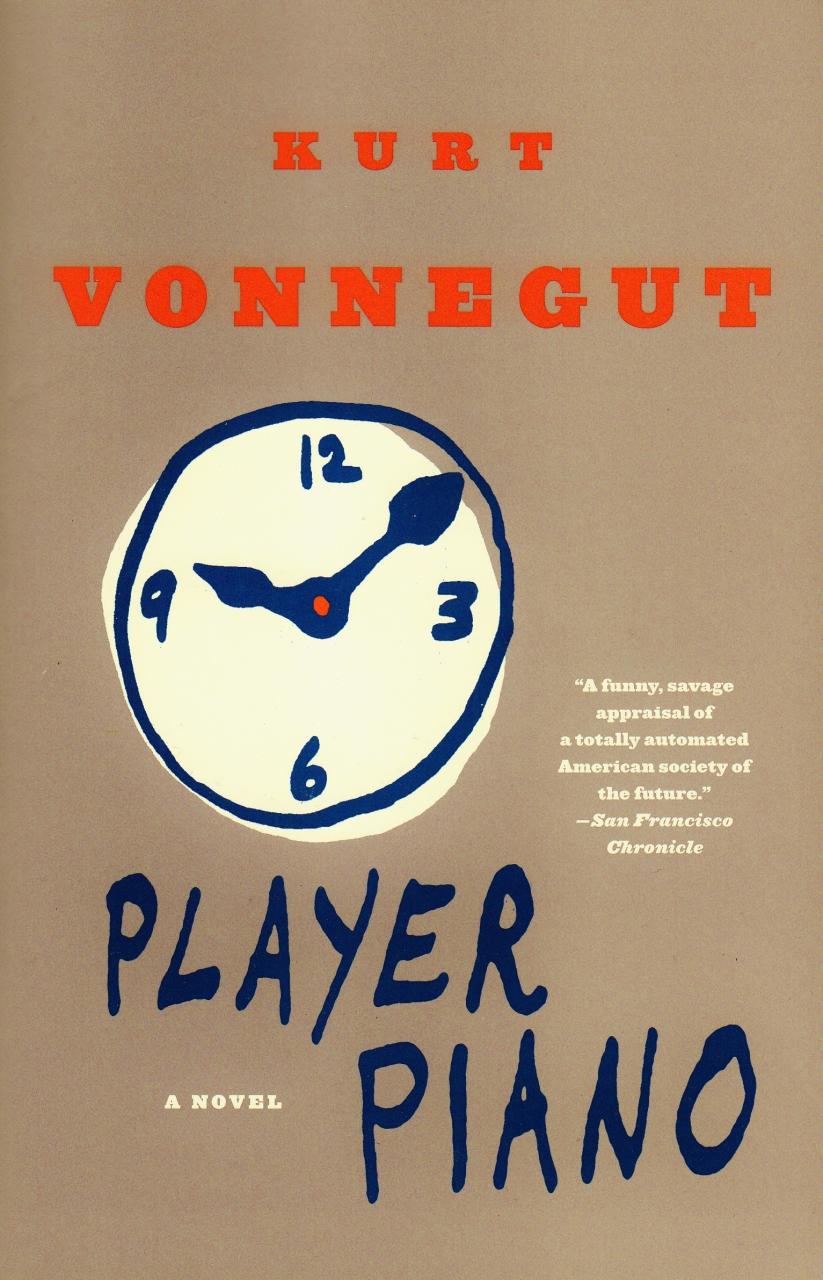
Title: Player Piano
Published: 1952
Table of Contents
Player Piano by Kurt Vonnegut Jr.: A Dystopian Classic
Kurt Vonnegut Jr.'s first novel, Player Piano, published in 1952, is a thought-provoking exploration of a future world dominated by machines and the implications this has for humanity. Set in a dystopian society where technology has replaced human labor, the novel follows engineer Paul Proteus as he grapples with the loss of purpose and identity in a world run by a supercomputer. With its satirical humor and insightful commentary on the dehumanizing effects of automation, Player Piano remains a timeless classic that continues to resonate with readers today.
Characters
- Paul Proteus: The protagonist of the story, Paul is a talented engineer who rises through the ranks at the Ilium Works, the largest manufacturing plant in the country. As he confronts the realities of a world controlled by machines, he begins to question his own place in society and the value of his work.
- Anita Proteus: Paul's wife, Anita, represents the traditional values of their society and struggles to understand her husband's disillusionment with the status quo. She provides a contrast to Paul's increasingly radical beliefs.
- Dr. Katherine Finch: A psychologist who works at the Reeks and Wrecks, a rehabilitation center for displaced workers, Dr. Finch becomes a trusted confidante for Paul as he navigates his personal and professional crises.
- Dr. Bud Calhoun: The creator of EPICAC XIV, the supercomputer that controls the Ilium Works and dictates the course of society. Dr. Calhoun embodies the dangers of unchecked technological advancement and the potential consequences of placing too much power in the hands of machines.
Detailed Summary
Player Piano is set in a future America where advanced automation has rendered most human labor obsolete. The society is divided into two classes: the "Reeks and Wrecks," those displaced by the machines and relegated to menial tasks, and the "Few," the elite technocrats who control the economy and government. Paul Proteus is an engineer at the Ilium Works, a prestigious manufacturing plant where he rises to a position of authority. However, as he witnesses the dehumanizing effects of automation on society, he becomes increasingly disillusioned with his own role in perpetuating this system.
Paul's discontentment reaches a breaking point when he is promoted to a higher position at the Ilium Works, further distancing him from the workers whose jobs have been taken over by machines. As he grapples with his sense of guilt and existential crisis, Paul begins to question the values of the society he once believed in. With the help of Dr. Katherine Finch, a psychologist at the Reeks and Wrecks, Paul starts to envision a different future where humans are valued for their creativity and individuality rather than their productivity.
As tensions between the disenfranchised workers and the technocratic elite escalate, Paul becomes involved in a rebellion against the oppressive system that controls their lives. The climax of the novel sees Paul and his fellow dissidents attempting to dismantle the supercomputer that governs the Ilium Works and dictates the fate of the entire society. In a daring act of defiance, Paul and his allies challenge the authority of the machines and assert their own agency in a world that seeks to dehumanize them.
Analysis
Player Piano offers a scathing critique of the consequences of unchecked technological advancement and the dehumanizing effects of automation on society. Through the character of Paul Proteus, Vonnegut explores the moral and ethical dilemmas inherent in a world where humans are reduced to mere cogs in a machine. The novel raises important questions about the value of work, the nature of progress, and the role of technology in shaping our lives.
Vonnegut's satirical humor and sharp wit are on full display in Player Piano, as he skewers the absurdities of a society that values efficiency and productivity above all else. The author's keen insight into human nature and his ability to blend social commentary with dark humor make Player Piano a thought-provoking and engaging read. The novel's portrayal of a world dominated by machines remains remarkably prescient in an era of increasing automation and artificial intelligence.
Ultimately, Player Piano serves as a cautionary tale about the dangers of sacrificing human values for the sake of technological progress. It challenges readers to reflect on the implications of a society where machines have taken over the work of humans and raises important questions about what it means to be truly human in an increasingly mechanized world.
Final thoughts
Player Piano by Kurt Vonnegut Jr. is a must-read for fans of science fiction, dystopian literature, and social commentary. With its compelling characters, thought-provoking themes, and timeless relevance, the novel continues to captivate readers nearly seventy years after its initial publication. If you enjoyed this summary, we highly recommend purchasing the complete book to experience Vonnegut's masterful storytelling in its entirety. Alternatively, you can listen to the audiobook for a more immersive reading experience.
Remember, in a world controlled by machines, it is more important than ever to embrace our humanity and strive for a future where creativity, individuality, and compassion prevail over cold efficiency. Player Piano reminds us of the power of human agency and the importance of resisting the dehumanizing forces that seek to diminish our spirit.
9780385333788 (ISBN10: 0385333781)
Format: 341 pages, Paperback
Original Title: Player Piano
Edition: September 1, 2006 by Dial Press
Swallows and Amazons Summary of Arthur Ransome's Book

The Moon Is a Harsh Mistress Summary of Robert A. Heinlein's Book

Franny and Zooey Summary of J.D. Salinger's Book

Tales of Ordinary Madness Summary of Charles Bukowski's Book

At the Mountains of Madness and Other Tales of Terror Summary of H.P. Lovecraft's Book

The Lover Summary of Marguerite Duras's Book
Related Books