

Ragtime Summary of E.L. Doctorow's Book
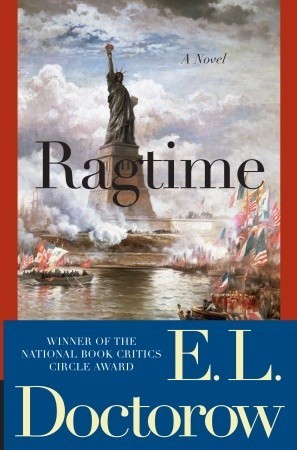
Title: Ragtime
Published: 1975
Table of Contents
Ragtime by E.L. Doctorow: A Masterpiece of American Fiction
Ragtime, published on June 12, 1975, stands as a seminal work of American literature that blends fact and fiction to create a vivid portrayal of the early 20th century. E.L. Doctorow weaves a complex tapestry of characters and events, capturing the essence of America during a time of rapid social and cultural change. With its unique narrative style and rich historical detail, Ragtime continues to captivate readers and critics alike, solidifying its place as a classic of the genre.
Characters
Emma Goldman
Emma Goldman, a real-life political activist and anarchist, plays a prominent role in Ragtime. Known for her radical views and advocacy for workers' rights, Goldman crosses paths with the fictional characters in the novel, adding depth and complexity to the story.
Evelyn Nesbit
Evelyn Nesbit, a famous showgirl and model, is another historical figure who appears in Ragtime. Her scandalous affair with prominent architect Stanford White becomes a central plot point in the novel, highlighting the intersecting lives of the rich and famous with everyday Americans.
Coalhouse Walker
Coalhouse Walker, a ragtime musician from Harlem, serves as a driving force in Ragtime. His quest for justice and dignity in the face of racial discrimination propels the narrative forward, showcasing the struggles and triumphs of African Americans during this turbulent period in American history.
J.P. Morgan
J.P. Morgan, one of the wealthiest and most influential figures of his time, also makes an appearance in Ragtime. His interactions with the fictional characters in the novel underscore the growing divide between the rich and poor, as well as the power dynamics at play in early 20th-century America.
Henry Ford
Henry Ford, the pioneering industrialist and founder of the Ford Motor Company, is another historical figure featured in Ragtime. His innovations and impact on American society are reflected in the novel, offering a glimpse into the rapid technological advancements of the era.
Harry Houdini
Harry Houdini, the renowned escape artist and illusionist, rounds out the cast of characters in Ragtime. His mysterious and enigmatic presence adds a touch of magic and intrigue to the story, blurring the lines between reality and fantasy.
Detailed Summary
Set in 1906 in New Rochelle, NY, Ragtime opens with an affluent American family going about their lives on a lazy Sunday afternoon. The arrival of Harry Houdini, who crashes his car outside their home, sets off a chain of events that brings together a diverse cast of characters, both real and imagined.
As the story unfolds, historical figures such as Henry Ford, Emma Goldman, J.P. Morgan, Evelyn Nesbit, Sigmund Freud, and Emiliano Zapata intersect with Doctorow's fictional family and other characters. The immigrant peddler and ragtime musician from Harlem, Coalhouse Walker, emerge as central figures whose struggles for justice and dignity mirror the broader societal changes taking place in America.
Through a series of interconnected narratives and perspectives, Ragtime captures the spirit of the era between the turn of the century and the First World War. The novel's blend of fact and fiction, fantasy and reality, creates a mesmerizing portrait of a rapidly evolving nation grappling with issues of race, class, and power.
Extensive Analysis
At its core, Ragtime is a meditation on the complexities of American identity and the ways in which individual lives intersect and diverge in a rapidly changing world. Doctorow's masterful storytelling and intricate narrative structure reflect the diverse and interconnected nature of American society, highlighting the tensions and contradictions that define the nation's history.
The characters in Ragtime serve as archetypes of their time, embodying the hopes, dreams, and struggles of a nation on the brink of transformation. From the glamorous showgirl to the immigrant peddler, each figure represents a different facet of the American experience, shedding light on the intersecting forces of race, class, gender, and power that shape society.
Through his evocative prose and keen insights, Doctorow paints a vivid portrait of early 20th-century America, capturing the clash of cultures, the clash of ideals, and the clash of dreams that define the era. Ragtime's exploration of historical events and figures, as well as its examination of the personal and political dynamics at play, offers a rich tapestry of themes and ideas for readers to ponder and reflect upon.
Ultimately, Ragtime stands as a testament to the enduring power of fiction to illuminate the past, engage with the present, and provoke thought about the future. Its lasting impact on readers and critics alike speaks to the timeless relevance of its themes and the enduring legacy of its storytelling.
To conclude, Ragtime by E.L. Doctorow is a masterpiece of American fiction that continues to captivate audiences with its rich tapestry of characters, events, and ideas. Whether you are a history buff, a literature lover, or simply a fan of great storytelling, Ragtime is a must-read that will leave a lasting impression on your mind and heart.
If you enjoyed this summary, we highly encourage you to purchase the complete book or listen to the audiobook for the full experience of Ragtime's brilliance.
9780812978186 (ISBN10: 0812978188)
Format: 320 pages, Paperback
Original Title: Ragtime
Edition: November 17, 2010 by Random House
Swallows and Amazons Summary of Arthur Ransome's Book

The Moon Is a Harsh Mistress Summary of Robert A. Heinlein's Book

Franny and Zooey Summary of J.D. Salinger's Book

Tales of Ordinary Madness Summary of Charles Bukowski's Book

At the Mountains of Madness and Other Tales of Terror Summary of H.P. Lovecraft's Book

The Lover Summary of Marguerite Duras's Book
Related Books