

The Crucible: A Play in Four Acts Summary of Arthur Miller's Book
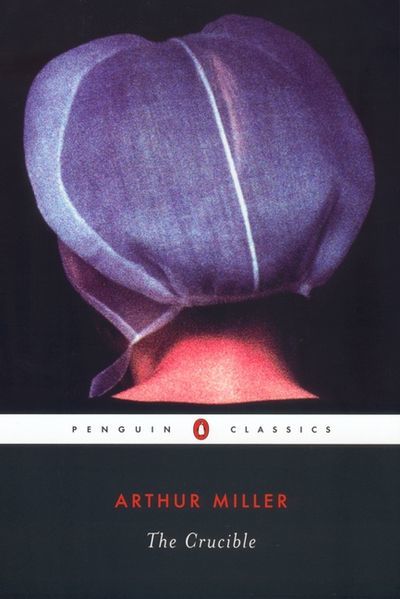
Title: The Crucible: A Play in Four Acts
Published: 1946
Table of Contents
The Crucible: A Play in Four Acts by Arthur Miller - Book Summary
First published in 1953, The Crucible by Arthur Miller is a classic play that delves into the witch-hunts and trials that took place in seventeenth-century Salem, Massachusetts. Miller's drama presents a vivid picture of a community consumed by hysteria and fear, showcasing the destructive power of socially sanctioned violence. Drawing parallels to the anti-communist fervor of the McCarthy era, The Crucible remains a poignant exploration of how fear and paranoia can lead to devastating consequences.
Characters
- Rev. Parris: The minister of Salem's church, who is concerned with maintaining his reputation and authority in the community.
- Tituba: Parris's Barbadian slave, who is accused of practicing witchcraft and starts the wave of hysteria in Salem.
- Abigail Williams: The niece of Rev. Parris, she leads the group of girls in accusing others of witchcraft to deflect attention from their own misdeeds.
- John Proctor: A farmer and central character of the play, who is caught in a moral dilemma as he grapples with his own sins and the witch trials.
- Elizabeth Proctor: John Proctor's wife, who is accused of witchcraft by Abigail Williams out of jealousy.
- Giles Corey: A landowner who falls victim to the witch trials due to his refusal to name the person who accused him.
- Rebecca Towne Nurse: A respected figure in Salem who is also accused of witchcraft, despite her reputation for goodness and piety.
- Mary Warren: A servant in the Proctor household, who becomes involved in the accusations of witchcraft and struggles with her conscience.
- Deputy Governor Danforth: The judge presiding over the witch trials, who is determined to see justice served, even at the cost of innocent lives.
Detailed Summary
The play opens in the home of Rev. Parris, where his daughter Betty lies unconscious after being caught dancing in the woods with Abigail Williams and other girls. Rumors of witchcraft begin to swirl in Salem, and Abigail leads the girls in accusing various townspeople of being witches. As the hysteria escalates, innocent people are arrested and brought to trial, including Elizabeth Proctor, who is accused by Abigail out of spite.
John Proctor, torn between his desire to protect his wife and his own guilt over an affair with Abigail, tries to intervene in the trials but is ultimately arrested himself. As the final acts play out in the courtroom, Deputy Governor Danforth remains steadfast in his belief in the girls' accusations, leading to tragic consequences for many involved.
Analysis
Arthur Miller's The Crucible serves as a powerful allegory for the McCarthy era, where political dissent was equated with moral deviance and led to widespread fear and paranoia. Through the trials in Salem, Miller explores how easily hysteria can take hold in a community and the devastating impact it can have on innocent lives.
The character of John Proctor emerges as the moral center of the play, showcasing the internal struggle between personal integrity and societal pressure. His refusal to falsely confess to witchcraft, despite the opportunity to save his own life, highlights the importance of standing firm in one's beliefs, even in the face of overwhelming adversity.
Overall, The Crucible is a timeless exploration of human nature and the dangers of unchecked power and prejudice. Miller's poignant commentary on the nature of fear and the consequences of blind conformity resonates with audiences to this day.
Final thoughts
For readers looking to delve into a gripping tale of history and moral complexity, The Crucible by Arthur Miller is a must-read. Whether you are a fan of classics, plays, or historical fiction, this book offers a compelling narrative that will keep you engaged from start to finish. Purchase the complete book to experience the full depth and richness of Miller's work, or opt for the audiobook for a convenient listening experience.
Don't miss out on this powerful portrayal of the human experience in times of crisis and turmoil. Pick up The Crucible today and immerse yourself in the gripping world of seventeenth-century Salem.
9780142437339 (ISBN10: 0142437336)
Format: 143 pages, Paperback
Original Title: The Crucible
Edition: March 25, 2003 by Penguin Books
Swallows and Amazons Summary of Arthur Ransome's Book

The Moon Is a Harsh Mistress Summary of Robert A. Heinlein's Book

Franny and Zooey Summary of J.D. Salinger's Book

Tales of Ordinary Madness Summary of Charles Bukowski's Book

At the Mountains of Madness and Other Tales of Terror Summary of H.P. Lovecraft's Book

The Lover Summary of Marguerite Duras's Book
Related Books