

The Handmaid’s Tale Summary of Margaret Atwood's Book
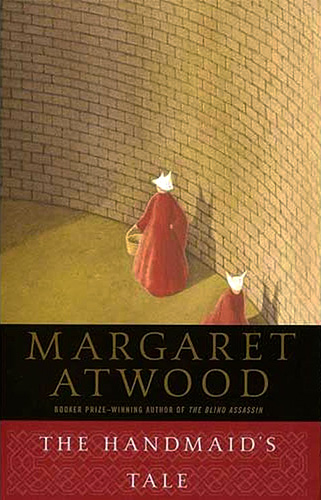
The Handmaid’s Tale #1
Title: The Handmaid’s Tale
Published: 1985
Table of Contents
The Handmaid’s Tale by Margaret Atwood: A Dystopian Classic
Set in a frighteningly plausible future where women are stripped of their rights and systematically oppressed, The Handmaid’s Tale by Margaret Atwood is a powerful and thought-provoking novel that continues to resonate with readers decades after its initial publication in 1985. As a pioneer of the dystopian genre, Atwood masterfully crafts a world where the government controls every aspect of women’s lives, reducing them to mere vessels for childbirth.
Characters
- Offred: The protagonist of the story, a Handmaid in the oppressive Republic of Gilead. She navigates the dangerous world around her while reminiscing about her previous life.
- The Commander: Offred’s assigned male counterpart who holds significant power in Gilead. He plays a pivotal role in shaping Offred’s fate.
- Serena Joy: The Commander’s wife, who struggles with her own desires and insecurities in a society that limits her autonomy.
- Ofglen: Offred’s companion and fellow Handmaid who carries a secret that could lead to their demise.
- Moira: Offred’s rebellious friend from the past, who serves as a reminder of the world they’ve lost.
- Aunt Lydia: A cruel enforcer of the regime, tasked with indoctrinating Handmaids into their new roles.
- Nick: The enigmatic driver assigned to Offred, whose actions blur the lines between ally and enemy.
- Janine: Another Handmaid whose tragic story reflects the harsh realities of their society.
Detailed Summary
Offred, our protagonist, is a Handmaid in Gilead—a society built upon strict gender roles and religious extremism. As a Handmaid, her sole purpose is to bear children for the ruling elite, as fertility rates have plummeted due to environmental disasters. She recounts memories of her previous life, where she had a husband, a daughter, and a job—all now forbidden luxuries.
Assigned to the Commander and Serena Joy, Offred must navigate a delicate dance of obedience and defiance to survive in this oppressive regime. Her interactions with the Commander and Serena Joy are fraught with tension, desire, and manipulation, as she struggles to maintain her sense of self amid constant surveillance and control.
Offred forms unlikely bonds with Ofglen, Moira, and Nick, each offering glimpses of hope and rebellion in a society designed to crush individuality. Together, they navigate the treacherous landscape of Gilead, where even the smallest acts of resistance carry severe consequences.
As Offred uncovers the truth behind Gilead’s rise to power and the sacrifices made to preserve it, she grapples with her own role in this dystopian society. The novel culminates in a shocking revelation that challenges everything Offred thought she knew, leading to a decision that will change her fate forever.
Extensive Analysis
The Handmaid’s Tale is a stark commentary on the dangers of extremism, the erosion of women’s rights, and the insidious nature of power. Atwood’s chilling portrayal of a society where women are reduced to their reproductive capabilities serves as a cautionary tale against complacency and blind conformity.
Through Offred’s eyes, we witness the gradual unraveling of civil liberties and the normalization of oppression. Atwood cleverly weaves elements of history, religion, and politics to create a world that feels disturbingly familiar yet shockingly alien.
The character dynamics in the novel are complex and multifaceted, showcasing the intricacies of power dynamics and personal agency. Offred’s internal struggles mirror the external turmoil of Gilead, illustrating the resilience and vulnerability of the human spirit in the face of tyranny.
At its core, The Handmaid’s Tale is a story of defiance and resilience—a reminder that even in the darkest of times, hope and resistance can endure. As readers delve into the depths of Gilead, they are challenged to confront uncomfortable truths about society, gender, and autonomy.
Final thoughts
Funny, unexpected, horrifying, and altogether convincing, The Handmaid's Tale is a must-read for fans of dystopian fiction and social commentary. As a timeless classic that continues to provoke thought and discussion, it remains as relevant today as it was upon its initial publication.
If you enjoyed this summary, we highly recommend purchasing the complete book to delve deeper into the world of Gilead and experience Margaret Atwood’s masterful storytelling firsthand. Alternatively, you can listen to the audiobook for a captivating auditory experience that brings the story to life in a whole new way. Dive into The Handmaid’s Tale and discover why it remains a literary masterpiece that stands the test of time.
Format: 314 pages, Paperback
Original Title: The Handmaid's Tale
Edition: April 1, 1998 by Anchor Books
Swallows and Amazons Summary of Arthur Ransome's Book

The Moon Is a Harsh Mistress Summary of Robert A. Heinlein's Book

Franny and Zooey Summary of J.D. Salinger's Book

Tales of Ordinary Madness Summary of Charles Bukowski's Book

At the Mountains of Madness and Other Tales of Terror Summary of H.P. Lovecraft's Book

The Lover Summary of Marguerite Duras's Book
Related Books