

The Origin of Consciousness in the Breakdown of the Bicameral Mind Summary of Julian Jaynes's Book
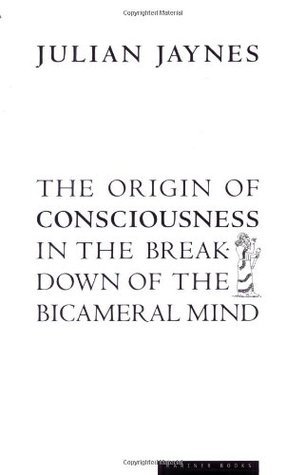
Title: The Origin of Consciousness in the Breakdown of the Bicameral Mind
Published: 1976
Table of Contents
- The Origin of Consciousness in the Breakdown of the Bicameral Mind: Unraveling the Human Psyche
- An Introduction to Julian Jaynes and his Revolutionary Thesis
- Exploring the Characters in Jaynes' Narrative
- A Detailed Summary of Jaynes' Revolutionary Thesis
- An Extensive Analysis of Jaynes' Groundbreaking Ideas
The Origin of Consciousness in the Breakdown of the Bicameral Mind: Unraveling the Human Psyche
An Introduction to Julian Jaynes and his Revolutionary Thesis
Julian Jaynes' book, "The Origin of Consciousness in the Breakdown of the Bicameral Mind," published in 1976, remains a significant work in the realm of psychology, philosophy, and nonfiction. This seminal text challenges traditional beliefs about the development of human consciousness and proposes a groundbreaking theory that has sparked debate and intrigue in academic circles.
At the core of Jaynes' thesis is the argument that human consciousness is not an innate trait that evolved over time but rather a learned process that emerged around three thousand years ago. According to Jaynes, early human civilizations operated under a radically different cognitive framework called the "bicameral mind," in which individuals experienced auditory hallucinations they believed to be the voices of gods or divine figures guiding their actions.
Exploring the Characters in Jaynes' Narrative
While "The Origin of Consciousness in the Breakdown of the Bicameral Mind" does not follow traditional character-driven storytelling, it delves into the collective psyche of early humans and the transformative shift in consciousness that occurred over time. Jaynes' narrative focuses on the evolution of human cognition and the development of self-awareness, drawing on archaeological evidence, historical texts, and neuroscientific research to support his arguments.
Throughout the book, readers encounter figures from ancient civilizations such as the Mesopotamians, Egyptians, and Greeks, whose cultural and religious practices serve as examples of the bicameral mindset in action. Jaynes examines how these societies navigated the complexities of governance, morality, and spirituality within the framework of a divided consciousness guided by perceived external voices.
A Detailed Summary of Jaynes' Revolutionary Thesis
In "The Origin of Consciousness in the Breakdown of the Bicameral Mind," Julian Jaynes presents a multidisciplinary approach to understanding the origins of human consciousness. He argues that early humans operated under a bicameral mindset in which the two hemispheres of the brain functioned independently, leading individuals to perceive auditory hallucinations as external directives.
Through a series of case studies, Jaynes explores the transition from the bicameral mind to modern consciousness, tracing the development of introspection, metaphorical language, and a sense of self-awareness. He proposes that the breakdown of the bicameral mind was catalyzed by social, political, and technological advancements that challenged traditional modes of cognition and perception.
Central to Jaynes' thesis is the idea that language played a crucial role in the evolution of consciousness, allowing individuals to internalize external voices and develop a sense of autonomy and agency. By examining ancient texts, religious practices, and neurological studies, Jaynes presents a compelling argument for the cultural and psychological significance of this cognitive shift in human history.
An Extensive Analysis of Jaynes' Groundbreaking Ideas
"The Origin of Consciousness in the Breakdown of the Bicameral Mind" has polarized academic opinions since its publication, with critics challenging Jaynes' hypotheses on methodological grounds and proponents championing the book as a paradigm-shifting work in the fields of psychology and consciousness studies.
One of the key strengths of Jaynes' thesis lies in its interdisciplinary approach, drawing on anthropology, linguistics, neuroscience, and history to support his arguments. By synthesizing diverse sources of evidence, Jaynes constructs a compelling narrative that challenges conventional wisdom about the nature of human cognition and sheds light on the cultural and cognitive evolution of our species.
Critics of Jaynes' work have raised concerns about the speculative nature of his claims and the reliance on interpretation rather than concrete empirical data. However, supporters of the book contend that Jaynes' willingness to think outside the box and challenge established paradigms is a hallmark of innovative scholarship that pushes the boundaries of knowledge and understanding.
Final thoughts
To conclude, "The Origin of Consciousness in the Breakdown of the Bicameral Mind" is a thought-provoking exploration of the human psyche and a testament to Julian Jaynes' bold and imaginative theorizing. Whether you are a scholar, a student, or a curious reader interested in the mysteries of consciousness, this book offers a compelling journey into the depths of our evolutionary past and the complexities of our present condition.
If you found this summary intriguing, I highly recommend delving into the complete text to fully immerse yourself in Jaynes' groundbreaking ideas. Alternatively, consider listening to the audiobook version for a dynamic and engaging experience that brings the narrative to life in a new and captivating way. Explore the depths of the human mind with Julian Jaynes and discover the origins of consciousness in a journey unlike any other.
9780618057078 (ISBN10: 0618057072)
Format: 491 pages, Paperback
Original Title: The Origin of Consciousness in the Breakdown of the Bicameral Mind
Edition: August 15, 2000 by Mariner Books
Going Clear: Scientology, Hollywood, and the Prison of Belief Summary of Lawrence Wright's Book

The Omnivore's Dilemma: A Natural History of Four Meals Summary of Michael Pollan's Book

The Power Broker: Robert Moses and the Fall of New York Summary of Robert A. Caro's Book

Truman Summary of David McCullough's Book

The Decline and Fall of the Roman Empire Summary of Edward Gibbon's Book

Flags of Our Fathers Summary of James D. Bradley's Book
Related Books