

The Road to Serfdom Summary of Friedrich A. Hayek's Book
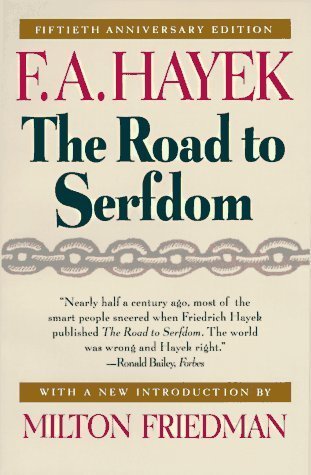
Title: The Road to Serfdom
Published: 1944
Table of Contents
The Road to Serfdom by Friedrich A. Hayek: An In-Depth Analysis
Friedrich A. Hayek's seminal work, The Road to Serfdom, is a classic in political philosophy, intellectual and cultural history, as well as economics. First published in England in 1944, the book immediately caused a sensation due to its passionate warning against the dangers of state control over the means of production. Hayek's argument against collectivism and the empowerment of government with increasing economic control struck a chord with readers, leading to widespread discussion and debate. In this article, we will delve into the characters, summary, and analysis of this thought-provoking book.
Characters
The central character in The Road to Serfdom is the individual, as Hayek highlights the importance of individual liberty in the face of encroaching government authority. While the book does not feature traditional characters in a narrative sense, it paints a vivid picture of the dangers of collectivism and central planning on society as a whole.
Detailed Summary
At its core, The Road to Serfdom serves as a cautionary tale about the perils of government overreach in economic planning. Hayek argues that as the state gains more control over the economy, individual freedoms are eroded, leading to a society where personal choice and autonomy are sacrificed in the name of central planning. Drawing on historical examples such as Nazi Germany and fascist Italy, Hayek demonstrates the devastating consequences of unchecked government power.
Throughout the book, Hayek makes a compelling case for the preservation of individual liberty and the free market. He contends that a decentralized, competitive economic system not only leads to greater prosperity but also protects against the tyranny of a centralized authority. By outlining the dangers of collectivism and the slippery slope towards totalitarianism, Hayek issues a stark warning to readers about the importance of limiting government intervention in economic affairs.
Extensive Analysis
Hayek's arguments in The Road to Serfdom have reverberated throughout the decades since its publication, influencing politicians, scholars, and the general public alike. His defense of individual liberty and free market principles continues to resonate in discussions about the role of government in society. The book's enduring relevance is a testament to Hayek's insights into the relationship between economic freedom and political oppression.
One of the key takeaways from The Road to Serfdom is the idea that central planning and government control are not conducive to a free and prosperous society. Hayek's rigorous reasoning and impassioned plea for individual rights have solidified his place as a leading voice in the fight against authoritarianism. His warning about the dangers of sacrificing personal freedoms in the pursuit of economic equality remains as relevant today as it was when the book was first published.
Final thoughts
To conclude, The Road to Serfdom by Friedrich A. Hayek is a timeless work that continues to shape discourse on economics, politics, and philosophy. Its powerful arguments in defense of individual liberty and free markets have influenced generations of thinkers and policymakers.
If you enjoyed this summary, we highly recommend purchasing the complete book for a more in-depth exploration of Hayek's ideas. Alternatively, you can listen to the audiobook for a convenient way to absorb the wisdom contained within The Road to Serfdom. Hayek's insights are as relevant today as they were when the book was first published, making it essential reading for anyone interested in the intersection of government authority and individual freedom.
9780226320618 (ISBN10: 0226320618)
Format: 274 pages, Paperback
Original Title: The Road to Serfdom
Edition: October 15, 1994 by University of Chicago Press
The Drunkard's Walk: How Randomness Rules Our Lives Summary of Leonard Mlodinow's Book

Nudge: Improving Decisions About Health, Wealth, and Happiness Summary of Richard H. Thaler's Book

Capital: A Critique of Political Economy, Volume 2 Summary of Karl Marx's Book

Factfulness: Ten Reasons We're Wrong About the World – and Why Things Are Better Than You Think Summary of Hans Rosling's Book

Prisoners of Geography: Ten Maps That Tell You Everything You Need to Know About Global Politics Summary of Tim Marshall's Book

The Law Summary of Frédéric Bastiat's Book
Related Books