

Why Nations Fail: The Origins of Power, Prosperity, and Poverty Summary of Daron Acemoğlu's Book
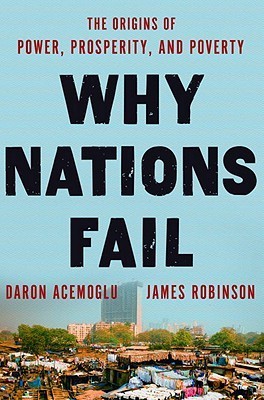
Title: Why Nations Fail: The Origins of Power, Prosperity, and Poverty
Published: 2012
Table of Contents
Book Summary: Why Nations Fail by Daron Acemoğlu
Why Nations Fail: The Origins of Power, Prosperity, and Poverty by Daron Acemoğlu and James Robinson is a groundbreaking book that delves into the question that has perplexed economists, historians, and policymakers for centuries: Why are some nations wealthy and successful while others remain mired in poverty and underdevelopment? Published on March 1, 2012, this nonfiction work challenges the conventional wisdom that attributes national prosperity or failure to factors such as culture, climate, or geography. Instead, the authors argue that it is the political and economic institutions within a country that ultimately determine its economic success or failure.
Characters
The characters in Why Nations Fail are not individuals in a traditional sense, but rather the nations themselves. Through detailed historical examples and case studies, Acemoğlu and Robinson illustrate how the quality of political and economic institutions can shape the trajectory of a nation's development. From the contrasting fortunes of North and South Korea to the divergent paths of Botswana and Zimbabwe, the authors present a compelling argument that institutional factors are paramount in determining a country's prosperity.
Detailed Summary
The central thesis of Why Nations Fail is that inclusive political and economic institutions are the key drivers of economic success, while extractive institutions lead to poverty and underdevelopment. Inclusive institutions, which encourage innovation, entrepreneurship, and widespread participation in economic opportunities, create a virtuous cycle of growth and prosperity. In contrast, extractive institutions benefit a small elite at the expense of the broader population, stifling economic progress and perpetuating poverty.
The authors illustrate their argument with a diverse range of historical examples, from the decline of the Roman Empire to the rise of the Soviet Union. They show how institutions that foster economic inclusivity and accountability have enabled certain nations to achieve rapid economic growth and development, while those with extractive institutions have languished in poverty and stagnation.
Analysis
Acemoğlu and Robinson's analysis in Why Nations Fail has profound implications for our understanding of global economic development and the challenges facing policymakers today. They challenge conventional wisdom that attributes economic success to factors such as natural resources or geography, arguing instead that it is the quality of institutions that ultimately determines a country's prosperity.
The authors raise important questions about the future trajectory of nations such as China and the United States, and the role of inclusive institutions in promoting economic growth and social progress. Their analysis highlights the importance of promoting political and economic inclusivity as a means to uplift billions of people out of poverty and towards prosperity.
To conclude, Why Nations Fail is a compelling and thought-provoking book that offers a new framework for understanding the roots of power, prosperity, and poverty in the world. By exploring the role of institutions in shaping economic development, Acemoğlu and Robinson challenge readers to rethink their assumptions about the factors that drive national success or failure.
If you found this summary intriguing, we encourage you to purchase the complete book for a more in-depth exploration of these fascinating ideas. Alternatively, consider listening to the audiobook version for a convenient way to absorb the insights and arguments presented in Why Nations Fail. This thought-provoking work is sure to change the way you perceive the dynamics of global economic development and the forces that shape the fortunes of nations.
9780307719218 (ISBN10: 0307719219)
Format: 529 pages, Hardcover
Original Title: Why Nations Fail: The Origins of Power, Prosperity, and Poverty
Edition: March 20, 2012 by Crown Currency
Firestarters: How Innovators, Instigators, and Initiators Can Inspire You to Ignite Your Own Life Summary of Raoul Davis Jr.'s Book

CEO-Stories: Children Employed by Owners Summary of Michael Eastwood's Book

Liar's Poker Summary of Michael Lewis's Book

Power And Prediction: The Disruptive Economics of Artificial Intelligence Summary of Ajay Agrawal's Book

Deep Work: Rules for Focused Success in a Distracted World Summary of Cal Newport's Book

Everybody Lies: Big Data, New Data, and What the Internet Can Tell Us About Who We Really Are Summary of Seth Stephens-Davidowitz's Book
Related Books